“Create in me a clean heart, O God, and put a new and right spirit within me. Cast me not away from your presence, and take not your holy Spirit from me” (Psalm 51).
Today, Ash Wednesday, this is how the Psalmist, King David, prays: a great and powerful king in Israel, but at the same time frail and sinful.
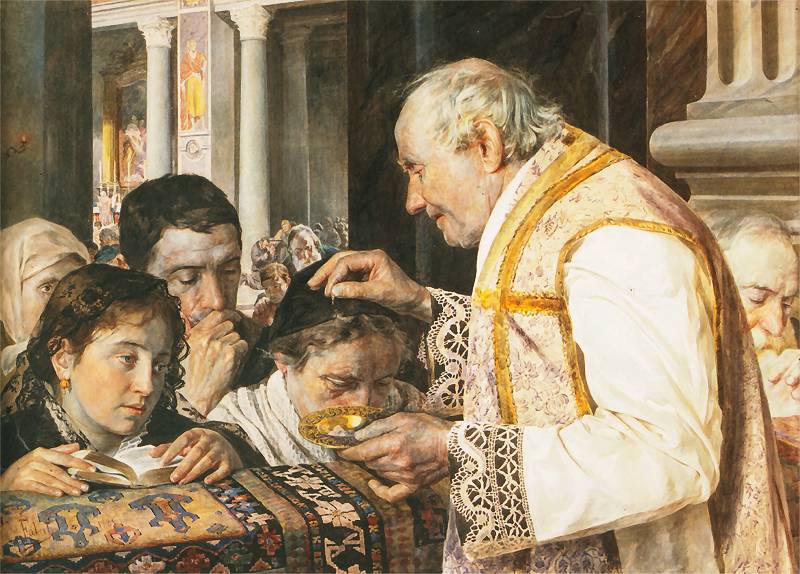
At the beginning of these 40 days of preparation for Easter, the Church puts his words on the lips of all who take part in the austere liturgy of Ash Wednesday.“Create in me a clean heart, O God, … take not your holy Spirit from me.” We hear this plea echoing in our hearts, while in a few moments we will approach the Lord’s altar to receive ashes on our forehead in accordance with a very ancient tradition. This act is filled with spiritual allusions and is an important sign of conversion and inner renewal. Considered in itself, it is a simple liturgical rite, but very profound because of its penitential meaning: with it the Church reminds man, believer and sinner, of his weakness in the face of evil and especially of his total dependence on God’s infinite majesty.
The liturgy calls for the celebrant to say these words as he places ashes on the foreheads of the faithful: “Remember, man, you are dust and to dust you will return”; or, “Turn away from sin and be faithful to the Gospel.”
from an Ash Wednesday homily by Pope John Paul II