• Bible Study Resources
    • Census
    • Links
      • The Word and Liturgy Links
      • Art Links
      • Sacred Music
      • Poetry Links
      • Sacrament of Matrimony Links
      • Catholic Education
      • Christian Legal Issues
      • Sacrament of Reconciliation Links
    • Prayer Cards
    • Starting a Schola
    • The Sacrament of Baptism
    • Funeral

Father David Rioux's Website

  • The Medal of Saint Benedict

    July 11th, 2024

    Saint Benedict’s name means blessing, and the cross of Saint Benedict brings blessings that curse evils.

    The image of Saint Benedict has the Cross in his right hand and his rule for a way of life in his left hand.

    A shattered cup with a serpent recalls a poisoned cup intended for Benedict shattering when he blessed the cup with the Sign of the Cross: ‘Crux s. patris Benedicti,’ ‘The Cross of our holy father Benedict.’

    The raven similarly recalls the carrying away of a poisoned loaf of bread intended for Benedict.

    Saint Benedict survived these attempts on his earthly life, to die peacefully with this brother monks in his Montecassino chapel after receiving Holy Communion.

    ‘Eius in obitu nostro praesentia muniamur!,’ ‘May we be strengthened by his presence in the hour of our death!’

    The Cross of Saint Benedict also offers blessings, and blessings against curses, with the initials:
    Circled C S P B: Crux Sancti Patris Benedicti, the Cross of our holy father Benedict.
    C S S M L: Crux sacra sit mihi lux, May the holy cross be my light.
    N D S M D: Nunquam draco sit mihi dux, May the dragon never be my guide.

    The Cross above all offers Christ’s PAX, Peace.

    Around the edges of the medal, the initials of a prayer of exorcism:

    V R S N S M V: Vade retro Satana! Nunquam suade mihi vana! Begone Satan! Never tempt me with your vanities!

    S M Q L I V B: Sunt mala quae libas. Ipse venena bibas! What you offer me is evil. Drink the poison yourself!

    Painting of Saint Benedict by Francisco de Zurbarán. Saint Benedict is shown holding a wine jar, in reference to a legend that a jar of poisoned wine was fractured when blessed by the saint, thus saving him. In the background Benedict is shown a second time, at prayer holding a crozier.
    Painting of Saint Benedict by Francisco de Zurbarán

    Order of Saint Benedict description of the Saint Benedict Medal

    Father Boniface Hick’s Ascension Press Description of the Medal of Saint Benedict

    Pints with Aquinas video of Benedictine Father Boniface Hicks describing the Medal of Saint Benedict

    Pope Benedict XVI’s description of Saint Benedict, the patron of his pontificate (General Audience 9 April 2008)

  • ‘My Lord and my God’ (John 20)

    July 3rd, 2024

    ‘On the evening of that day, the first day of the week…’ The Lord’s Day.

    ‘Where the disciples were in fear…’ (John 20).

    ‘ Jesus came and stood among them and said to them, “Peace be with you.” When He had said this, He showed them His hands and His side.
    Then the disciples rejoiced when they saw the Lord.’

    His wounds remain for us, eternally, for our contemplation, from His once-for-all perfect Sacrifice, in our Saving Lord’s perfect love for us, for our salvation.

    Thomas was not with them. ‘Unless I see the wounds I will never believe.’

    The next Lord’s Day. ‘Peace be with you.’ ‘See my hands and my side.’
    ‘Do not disbelieve, but believe.’

    ‘My Lord and my God.’

    As with Saint Pius X we might pray with each elevation of the Blessed Sacrament of the Altar, the Lamb of God, standing, as though it had been slain (Revelation 5).

    Thomas’ journey in faith is ours.

    We recall Thomas asking: ‘Lord, we do not know where you are going. How can we know the way?’ (John 14:5).
    Our Lord explains: I AM the Way, the Truth and the Life.
    Following on the disciples’ way, Jesus goes to Lazarus, back to Jerusalem, to the place where He will be sacrificed, along the way of the Cross
    (John 11). ‘So Thomas said to his fellow disciples, “Let us also go, that we may die with him.”’

    There may be courage in dying with, alongside, but it may be harder for Thomas, for us, to die after, not seeing…

    Continuing in the Gospel: ‘Now Jesus did many other signs in the presence of the disciples, which are not written in this book; but these are written so that you may believe that Jesus is the Christ, the Son of God, and that by believing you may have life in His Name’ (John 20:30-31).

    That we may know the Way, in Truth, to Life eternal, with our Lord and our God.

    Saint Thomas the Apostle, mosaic.
  • Our Savior Jesus Christ destroyed death and brought life to light through the Gospel (acclamation)

    June 29th, 2024

    God did not make death, God forms us in His image and likeness, God sustains us in being (Wisdom 1-2).  “But by the envy of the devil,
    death entered the world, and they who belong to his company experience it.”

    The Raising of Jairus’ Daughter, Gabriel Max

    ‘Illness, in both the girl and the woman suffering from a hemorrhage, tends towards death, and death imposes itself in all its terrible reality.
    Saint Mark (5:21-43) brings us to experience this in his very vivid accounts of these events.
    And they help us to listen to Jesus Christ, who is asking us to have faith.
    For without faith we cannot understand these miracles, since not only do they lead us to observe that the cure of the woman with a hemorrhage and the resurrection of Jairus’ daughter have taken place, but we must confront the faith option in order to arrive at our own cure and our own resurrection’
    (from the Pontifical Council for Pastoral Assistance to Health Care Workers, “The Gospel of Health,” 1996).

  • His name is John (Luke 1:63)

    June 24th, 2024

    This day, we observe the Nativity of Saint John the Baptist, the only birthday the Church celebrates other than the Nativity of the Blessed Virgin Mary, and the Nativity of Jesus Christ, Christmas.

    Jesus Christ, Son of God, our Lord and Saviour, praised John’s birth: ‘Truly, I say to you, among those born of women there has arisen no one greater than John the Baptist’ (Matthew 11:11).

    John the Baptist, forerunner for Christ, constantly bore witness to the Truth. He called out the ruler of his day, King Herod, for Herod’s scandals and an adulterous relationship.

    We hear Herod was afraid of John for speaking the Truth (Mark 6:20).

    Under pressure, Herod tries to silence Truth by imprisoning and then killing John.

    Ultimately Truth wins out. Truth cannot be concealed, all will be revealed, all will be known (Matthew 10:26; 2 Peter 3:10).

    After Herod was deposed, that king could no longer make anyone celebrate his scandals or his birthday.

    We observe the Nativity of Saint John the Baptist’s fearless witness to the Truth, to this day.

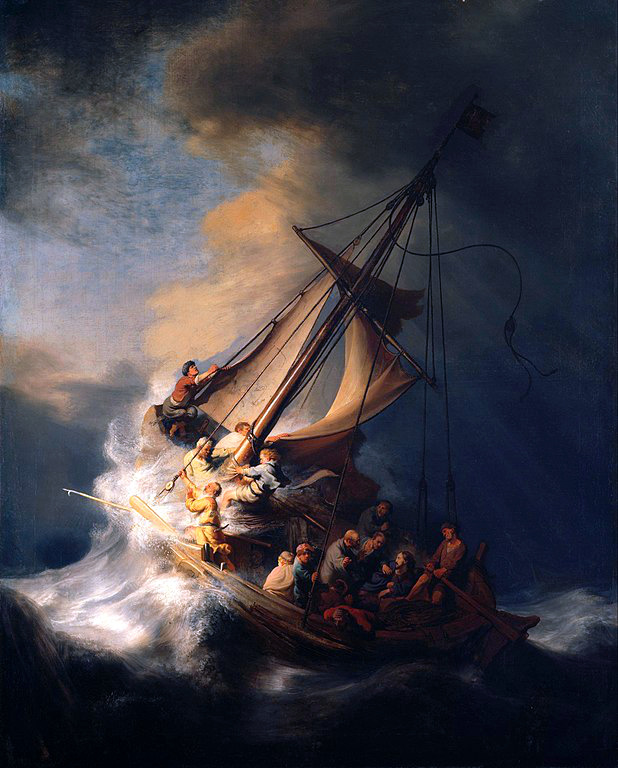
  • ‘Lord, do you not care that we are perishing?’ (Mark 4:35-41) Yes. God rests in caring for us.

    June 22nd, 2024

    ‘A great windstorm rose up, and the waves broke over the boat, so that it was beginning to fill with water.
    But Jesus was in the stern, asleep on the cushion.
    The disciples woke him and said to Him,
    “Do you not care that we are perishing?”
    He rose up, and rebuked the wind, and said to the sea, “Quiet! Be stilled.” Then the wind ceased, and there was a great calm.
    He said to them,
    “Why are you afraid?
    Do you not yet have faith
    ?”
    And they were terribly afraid and said to one another,
    “Who is this, that even the wind and sea obey Him?” (Mark 4:35-41)

    Christ in the Storm on the Lake of Galilee, by Rembrandt

    Jesus Christ demonstrates His Godly nature, His lordship over all creation, as in our Psalm (107): He hushes the storm to a gentle breeze, the billows of the sea are stilled…

    When God created heaven and earth, and all to be good, very good.
    God rests, and God blesses and hallows the seventh day for us (Genesis 1-2).

    But God never abandons us to ourselves.
    At every moment, God upholds us and sustains us in being (Catechism of the Catholic Church § 301).

    God rests in caring for us.

  • “The seed is the Word of God, Christ is the Word. All who come to Him shall live for ever” (Gospel Acclamation)

    June 16th, 2024

    This Lord’s Day Word compares the Kingdom of God to the mustard seed (Mark 4:26-35).
    The seed figures in Christ’s teaching disciples who ask, ‘increase our faith’ (Luke 17:5-10).
    “If you have faith like a grain of mustard seed, you will say to this mountain, ‘Move from here to there,’ and it will move, and nothing will be impossible for you” (Matthew 17:14-20).

    G. K. Chesterton’s poem The Holy of Holies asks, ‘what is in the heart of the smallest of seeds?’

    God Almighty, and with Him
    Cherubim and Seraphim,
    Filling all eternity—
    Adonai Elohim.

    Our recent Solemnity of Corpus Christi celebrated the Mystery that the tiniest grain of consecrated bread becomes the whole Body of Christ, and each person in Holy Communion receives the whole Body of Christ.

    Psalm 92 tells us how to receive and realize the potential of this Grace that Christ offers us, to build up the Kingdom of God, with nothing impossible for us. If we faithfully nurture the seed of the Word, ‘the righteous shall flourish, in the courts of our God.’

    The Sower, by James Tissot
  • Memorial of the Immaculate Heart of the Blessed Virgin Mary

    June 8th, 2024

    Joseph and Mary marveled at what was being said of the child Jesus.
    Simeon blessed them and said to Mary,
    ‘Behold, this child is appointed for the fall and rising of many in Israel, and for a sign that is opposed…
    and a sword will pierce through your own soul also, so that thoughts from many hearts may be revealed’ (Luke 2:33-35).

    Heart of Mary, by Miguel Ballejo y Mandirano
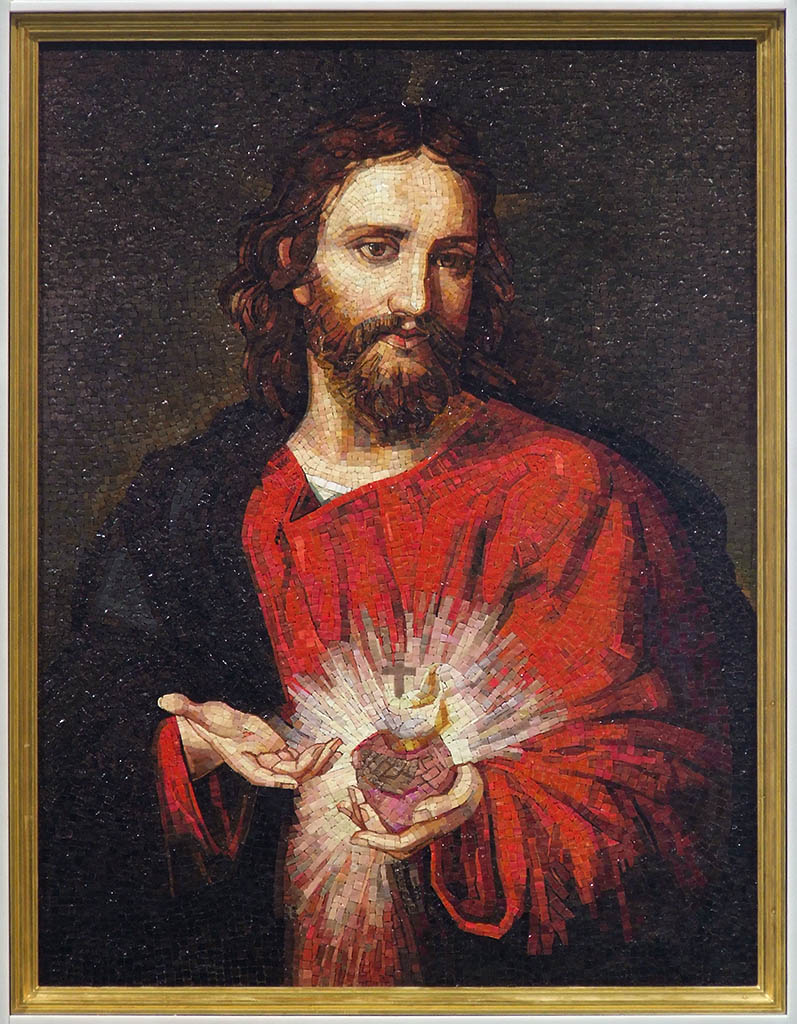
  • The Solemnity of the Most Sacred Heart of Jesus

    June 7th, 2024

    The Sacred Heart is the Heart of God laid bare for man.

    Christ’s human heart is lifted high on the Cross.

    The heart of the Church is open to all who seek.

    Christians live between Christ’s Most Sacred Heart of Divine Mercy, and those we are called to serve.

    The Most Sacred Heart of Jesus – Mosaic from the Cathedral Basilica of Saint Louis
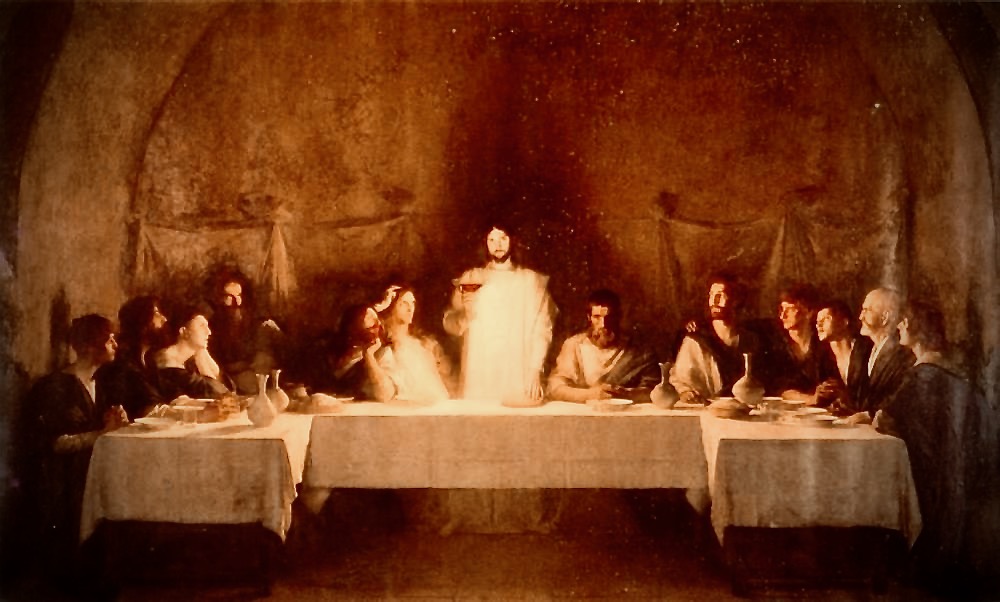
  • Corpus Christi

    June 1st, 2024
    The Last Supper, by Pascal Dagnan-Bouveret

    O God, who in this wonderful Sacrament have left us a memorial of Your Passion, grant us, we pray, so to venerate the sacred mysteries of your Body and Blood that we may always experience in ourselves the benefit of Your Redemption
    (Collect of the Solemnity of the Most Holy Body and Blood of Christ).

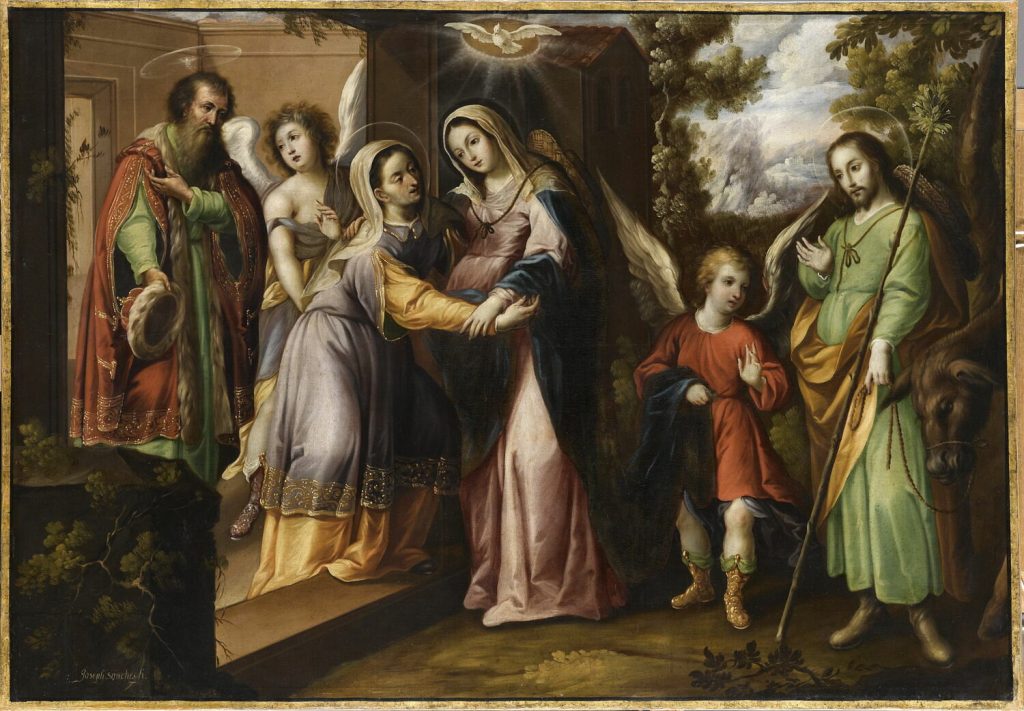
  • The Visitation of the Blessed Virgin Mary

    May 30th, 2024
    La Visitation, by José Sánchez

    Mary offers her example of discipleship, humbly accepting the Lord’s plan for her, and generously hastening to serve God and neighbour with joyful praise and thanksgiving (Luke 1:39-56).

←Previous Page
1 2 3 4 … 13
Next Page→