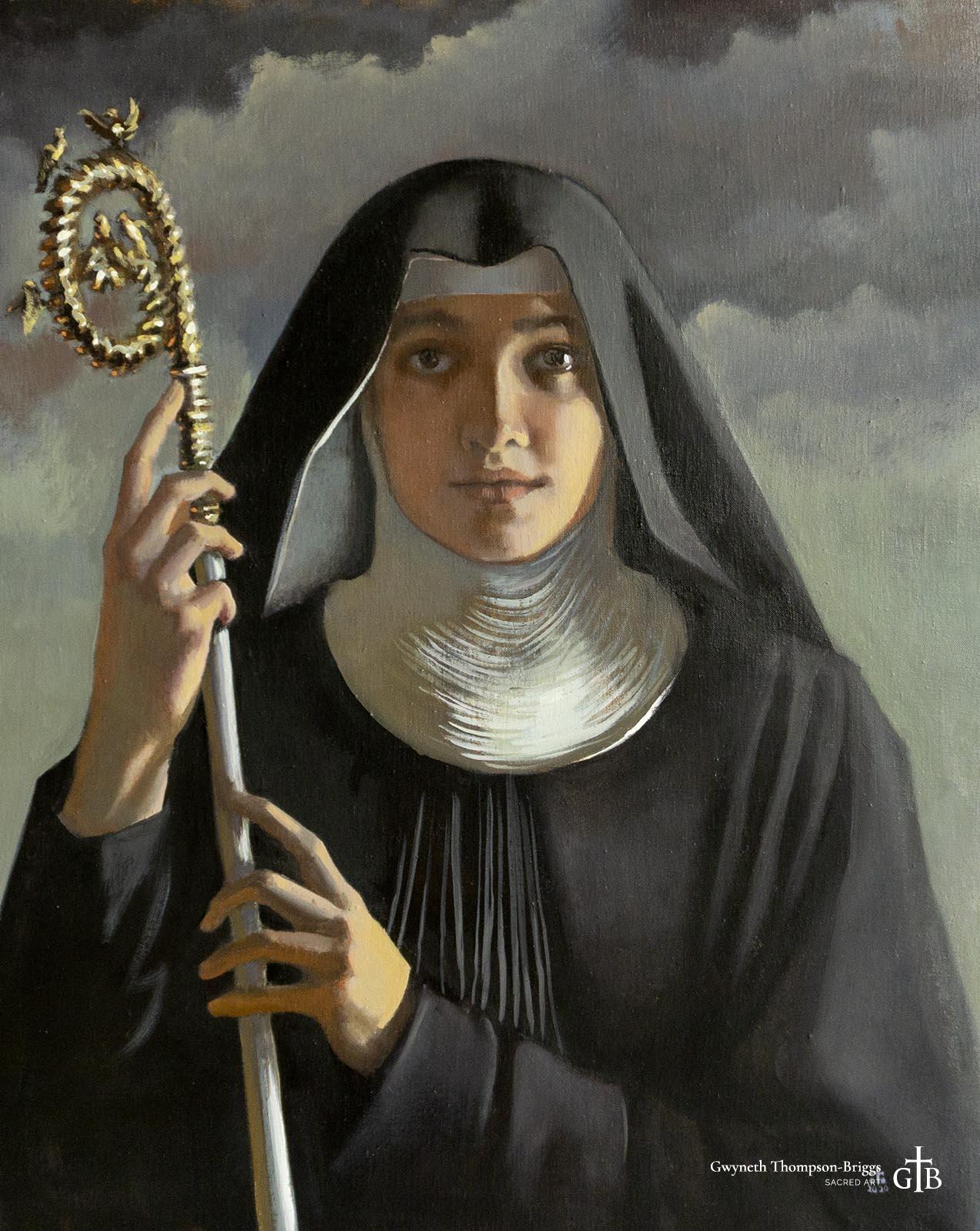
If you seek, you will find… if you ask… the Lord does teach us how to pray.
When we set ourselves in a certain place, if we sacrifice a bit of our time, and a bit of our will, to make some sacred space and time for the Lord in our lives, we will learn God’s Will for building up the True Kingdom in Justice.
The Lord’s Prayer is to set our needs before the Lord, to examine our conscience, and to learn God’s Will for us.
It is a model of prayer that leads us into Christian meditation, as it has for the Church fathers, doctors of the Church, and popes.
Our Catechism on Christian Prayer is organized according to the Lord’s Prayer (CCC§2759).
Saint Teresa of Avila, Doctor of the Church, teaches that meditation on the Lord’s Prayer, on the Word of God, is a matter of life and death for Christians.
From Saint Jerome, we hear that ignorance of Scripture is ignorance of Christ.
Therefore, we do the hard work of meditating and reasoning on Scripture, the Word of God, to learn the Will of God, to learn God’s desire for our Christian life, to learn to see God’s Grace working in our lives, and to love the Lord with all our mind (Mark 12:30).
Prayer is hard work, disciplining ourselves, healing our hardened hearts, to conform our hearts and minds away from our selfishness, toward God’s Good Will for our salvation. Bishop Robert Barron reminds us that, as Christians, we often conclude our prayer with ‘through Christ our Lord…’ which should be sobering, to our often petty petitionary prayers for our wants rather than others’ true needs…
Saint Alphonsus Liguori defines prayer as entering into familiar conversation with the Lord who loves you.
It is not for us to tell, or demand, or try to take from God, to try to make ourselves God, which is the cause of our Fall.
It is to humbly open ourselves to the Word of God, to Divine Revelation, about the next step in our journey in Faith, from where we find ourselves. Always examine the Spirit (1 John 4).
And when others know we are praying for them, it disposes them also to God’s grace in their life.
For those who disrespect prayer, consider how many people believe their phones and devices are listening to them for advertising and surveillance purposes, yet they fail to perceive the effects of praying to our loving Creator, in whom we live and move and have our being… (Acts 17:28).
Discipline in devotions can help. With the prayer of the Rosary, we are not simply vocalizing prayers but we are meditating on the glorious, luminous, joyful, and sorrowful Way of the Cross.
With the same Cross and prayer beads, Saint Faustina, whom we remember today, gives us the Divine Mercy prayer to meditate on God’s saving goodness and mercy for humankind.
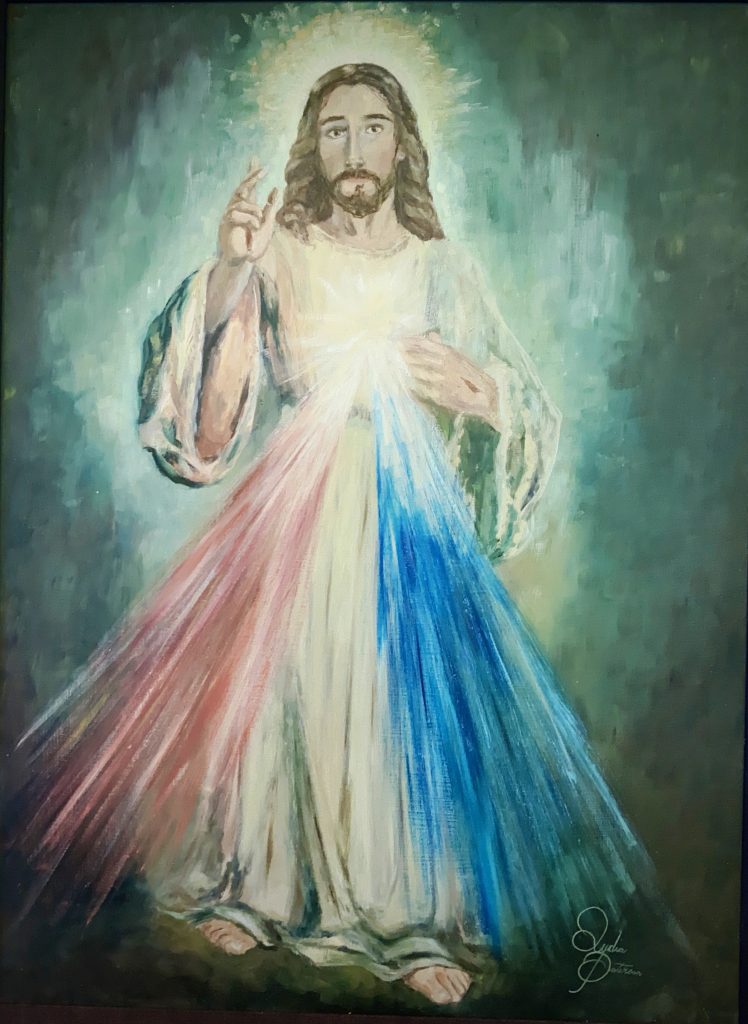
In the Divine Mercy chaplet we have the beautiful, ancient prayer known as the Trisagion:
‘Holy, Mighty, Immortal One, have mercy on us.’
This meditation draws us into contemplation, to ‘Be still and know that I AM God’ (Psalm 46:10), to glimpse Life eternal, to be infused with the Love of God and the desire to seek His face.
When we encounter the Lord in prayer, in meditation, in contemplation, in living Christian life, we may recognize like James and Peter and John do in our letter to the Galatians (2:1-14) the graces that we have been given. These are the supernatural gifts God gives us for our salvation, especially in His invitation for us to respond to his Will, and to participate in His Divine plan for building up the true kingdom and for our entering into Life eternal.
This is all part of the gift God makes of His own Life, to infuse us with His Holy Spirit, to heal wounds, and to sanctify our souls.
Then let us ‘go out to all the world and tell the good news.
Praise the Lord, all you nations! Extol Him, all you peoples!
Great is his steadfast love toward us; the faithfulness of the Lord endures forever‘ (Mark 16:15; Psalm 117).